
On average, women have about 50% less serotonin in their brains than men.
This imbalance partly explains why women are more prone to mood swings, anxiety disorders, and depression. Serotonin, often referred to as the "happiness hormone," is a central neurotransmitter responsible not only for emotional stability but also for sleep, appetite, pain perception, and hormonal balance. The lower serotonin activity in women is partly linked to hormonal fluctuations – especially estrogen, which influences serotonin synthesis, release, and receptor density. When estrogen levels drop, for example, during the luteal phase or menopause, serotonin levels also decline.
"Chronic stress affects women differently biochemically. Our hormonal system reacts more sensitively, and the stress axis becomes overactive more quickly. A targeted use of plant-based substances can help restore this biochemical balance – and strengthen resilience from within."Dr. Dorothea Portius
Cycle-related imbalances in serotonin levels
This correlation is increasingly confirmed in research. Studies show that women are particularly susceptible to serotonergic imbalances during menstruation, pregnancy, and menopause. A meta-analysis by Albert et al. (2015, Biological Psychiatry) describes how estrogen directly affects the activity of tryptophan hydroxylase 2 – the key enzyme that forms serotonin from the amino acid tryptophan. A lack of estrogen can therefore biochemically impair serotonin balance.
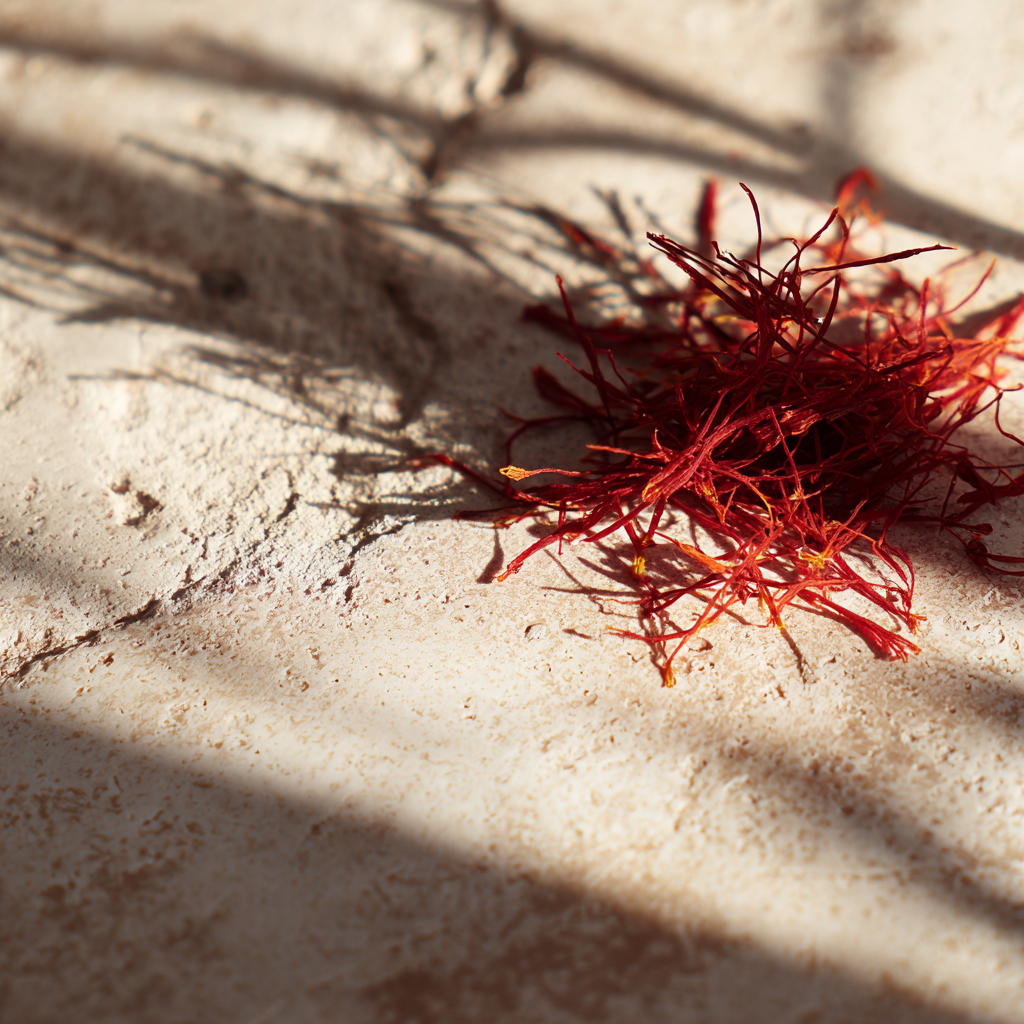
This is precisely where saffron comes in – an ancient, yet increasingly scientifically recognized herbal remedy. Saffron extract (Crocus sativus L.) contains bioactive substances such as crocin, crocetin, picrocrocin, and safranal, which directly affect serotonin metabolism. Several clinical studies have shown that saffron inhibits the reuptake of serotonin, dopamine, and norepinephrine – similar to modern antidepressants, but without their typical side effects.
One of the most well-known studies comes from Akhondzadeh et al. (2005, Phytotherapy Research): In a randomized, double-blind study, saffron extract (30 mg/day) was compared with fluoxetine over six weeks. The result: Both showed a comparable improvement in depressive symptoms – but without the common side effects of fluoxetine, such as loss of libido. A more recent meta-analysis by Lopresti and Drummond (2014, Journal of Integrative Medicine) confirmed this effect: Saffron showed a significant antidepressant and anxiolytic effect in eight controlled studies, in both women and men.
"Saffron is one of the few plants that directly affect our stress axis. It helps regulate cortisol and restore emotional balance – especially during periods of hormonal changes when many women react more sensitively to stress."
Dr. Dorothea Portius
Saffron for Premenstrual Syndrome
However, saffron is particularly interesting for women because it not only stabilizes mood but can also alleviate hormonal and premenstrual symptoms. A double-blind study by Agha-Hosseini et al. (2008, BJOG) showed that 30 mg of saffron daily over two menstrual cycles significantly reduced symptoms of premenstrual syndrome (PMS) – particularly irritability, fatigue, and cravings. At the same time, participants reported improved quality of life and more balanced sleep.
Furthermore, there is evidence that saffron has antioxidant and neuroprotective effects. Crocin and crocetin protect nerve cells from oxidative stress, promote neuroplasticity, and regulate the hypothalamus-pituitary-adrenal (HPA) axis. These effects can contribute to the long-term stabilization of hormonal balance – an aspect that is particularly significant during hormonal transitional phases such as perimenopause. In addition, saffron generally improves mood, reduces stress, and promotes concentration – regardless of gender.
Advantages of a holistic efficacy profile
In modern research, saffron is therefore increasingly considered a plant-based "serotonin modulator" – with a holistic efficacy profile that addresses the psyche, hormones, and nervous system simultaneously. In a world where more and more people suffer from sensory overload, stress, and sleep disorders, saffron offers a natural way to regain inner balance.
While synthetic antidepressants are often used in the acute phase, saffron could help strengthen emotional balance preventively in the long term. Its effectiveness has now been proven by more than 20 clinical studies, and its tolerability is exceptionally good.
Saffron is thus far more than a spice. It is a bridge between modern neuroscience and traditional plant medicine – an example of how nature often already holds solutions that we are only slowly beginning to understand again. Especially for women, whose serotonin system reacts more sensitively to hormonal fluctuations, saffron can be a real blessing – gentle, effective, and profound all at once.
References
- Albert, K. M. et al. (2015). The role of estrogen in depression and anxiety disorders. Biological Psychiatry, 78(3), 163–173.
- Akhondzadeh, S. et al. (2005). Crocus sativus L. in the treatment of mild to moderate depression: A double-blind, randomized trial. Phytotherapy Research, 19(2), 148–151.
- Lopresti, A. L., & Drummond, P. D. (2014). Saffron (Crocus sativus) for depression: A systematic review of clinical studies. Journal of Integrative Medicine, 12(3), 197–204.
- Agha-Hosseini, M. et al. (2008). Crocussativus L. (saffron) in the treatment of premenstrual syndrome: A double-blind, placebo-controlled trial. BJOG, 115(4), 515–519.
-
Shahpari, M. et al. (2014). The effect of saffron on semen parameters and erectile function: A randomized, double-blind, placebo-controlled trial. Urology Journal, 11(3), 1975–1981.
Disclaimer
This article is for educational purposes only and is not intended as medical advice. Always consult your doctor before starting any new supplements.


Leave a comment
This site is protected by hCaptcha and the hCaptcha Privacy Policy and Terms of Service apply.